




GNRHS 2026 Virtual Convention – November 7 & 8
Please join us for an online-only convention experience, open to GNRHS members and friends and anyone else interested. Details are below, or download this printable flyer if you prefer.Schedule of Presentations
Note: All times shown are Central Time
Saturday, November 7
- 2:30pm – Welcoming Remarks
- 2:35pm – Marias Pass Stations
- Break – 10 minutes
- 3:45pm – Glacier Trail
- Afternoon Recess
- 6:30pm – Red Bus Family Feud
- Break – 15 minutes
- 7:45pm – “A Glacier Gallery” | New Book
Sunday, November 8
- 2:30pm – Member Meeting
- Break – 15 minutes
- 3:45pm – Mapping the GN
- Afternoon Recess
- 6:30pm – GN Online Research Demo
- Break – 15 minutes
- 7:45pm – Keynote Speaker
- 8:45pm – Awards and Convention Conclusion
To access the convention beginning November 7, CLICK HERE
Keynote Speaker
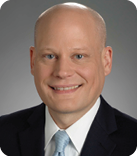
Zak Andersen | Mr. Andersen grew up in Helena, Montana, and received his B.A. in Political Science at the University of Montana. He spent 15 years in Washington, D.C., and now resides in Fort Worth, Texas, where he is the Chief of Staff and Vice President, Communications for BNSF Railway. He is also the BNSF Foundation President. Mr. Andersen is responsible for all internal and external communication for the railroad, ranging from employees to media to communities, and manages the annual $12 million foundation fund in the railroad service territory of 28 western states. Mr. Andersen joined the Glacier Fund Board in July 2012, and transitioned onto the Glacier National Park Conservancy Board in January 2013, where he served for eleven years.
Speakers

A Tour of GN Stations Across Marias Pass – This presentation will provide a quick look at each GN station between Columbia Falls and Browning. Starting with a site history; maps, blueprints, photos and interesting facts will be used to document each location.
GN Online Research Demo – Obtaining answers to your questions about the Great Northern Railway may be easier than you think. There is an abundance of resources available, and many can be found at the convenience of your computer workstation. Attend this session and learn of research tools available online.
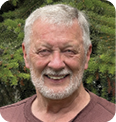
Bob Kelly | Bob Kelly serves as the Great Northern Railway Historical Society representative on the PNRA Board of Directors. After his retirement from the Boeing Company as the Director of Employee Training, he has volunteered in many history oriented institutions. At the Skykomish Museum he serves as Treasurer and organizes the annual “Great Northern Day” in Sky event each Fall. For the GN Society he has assisted in writing more than a dozen Historical Reference Sheets.
“The Red Bus Family Feud” – Join Ray for a look at the often-strained relationship between Great Northern executives and bus company co-owner Howard Hays. While their common goal was to provide arriving rail passengers with a Red Bus Tour through Glacier National Park, competing priorities led to inevitable conflicts.
Ray Djuff | Ray Djuff is a Calgary writer whose love of Waterton-Glacier International Peace Park grew from four summers working at the Prince of Wales Hotel. He has produced more than a dozen books on the Parks, as well as a GNRHS reference sheet on Two Guns White Calf.

Glacier Trail – Have you ever walked or hiked the Glacier Trail? Even if you have traipsed across miles of Glacier National Park, the answer is likely “no.” The Glacier Trail was an early automobile route that largely followed the GN’s main line out of Minnesota and across North Dakota, ending at today’s East Glacier. Find out what GN officials thought of this.
Scott Tanner | Scott Tanner retired in 2022 from the Federal Aviation Administration. His interest in the Great Northern focuses largely on the railroad’s advertising and promotion. Scott has published GNRHS Reference Sheets about artist Winold Reiss and the Great Northern’s radio advertising program, Empire Builders.
Mapping the GN – Old and New Perspectives – Jon will demonstrate his Great Northern System Map project that he announced in November of 2024. Jon’s project will be an invaluable resource for historians and modelers as well, offering ways the planning process for a GN based layout can be enhanced.
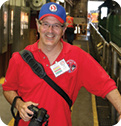
Jon Snyder | Jon Snyder was born in Minneapolis and spent his formative years near Wayzata, where passing GN trains sparked a lifelong interest in the GN. Jon lives in Philadelphia and recently retired from a career in Graphic Design and Illustration, including more than 25 years in the newsroom of the Philadelphia Daily News and Inquirer. He has authored two reference sheets for the GNRHS: “The Empire Builder’s Modern Lettering” and, with Fr. Dale Peterka, “Great Northern Y-1 Electrics”, in addition to several articles for the Goat.
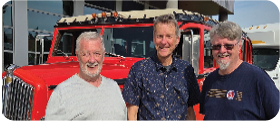
“A Glacier Gallery” | New Book – This is what results when three GNRHS buddies with an affinity for Glacier Park start comparing notes. Ray Djuff, Bill Lundgren, and Scott Tanner will describe what led to the creation of the book and share samples from it. Nearly one-third of the 66 Glacier stories involve GN. The two are inseparable.
Bill Lundgren | Bill Lundgren grew up along the main line of the Great Northern in Belton (West Glacier) Montana at the West Entrance to Glacier National Park. He was lucky to have lived and worked in this unique setting, influenced by its GN heritage and one of our major National Parks.
To access the convention beginning November 7, CLICK HERE
For any questions or for further details, please contact the Convention Coordinator, Mr. Bill McGinley, at william.mcginley@gmail.com.
Zak Andersen | Mr. Andersen grew up in Helena, Montana, and received his B.A. in Political Science at the University of Montana. He spent 15 years in Washington, D.C., and now resides in Fort Worth, Texas, where he is the Chief of Staff and Vice President, Communications for BNSF Railway. He is also the BNSF Foundation President. Mr. Andersen is responsible for all internal and external communication for the railroad, ranging from employees to media to communities, and manages the annual $12 million foundation fund in the railroad service territory of 28 western states. Mr. Andersen joined the Glacier Fund Board in July 2012, and transitioned onto the Glacier National Park Conservancy Board in January 2013, where he served for eleven years.
A Tour of GN Stations Across Marias Pass – This presentation will provide a quick look at each GN station between Columbia Falls and Browning. Starting with a site history; maps, blueprints, photos and interesting facts will be used to document each location.
GN Online Research Demo – Obtaining answers to your questions about the Great Northern Railway may be easier than you think. There is an abundance of resources available, and many can be found at the convenience of your computer workstation. Attend this session and learn of research tools available online.
Bob Kelly | Bob Kelly serves as the Great Northern Railway Historical Society representative on the PNRA Board of Directors. After his retirement from the Boeing Company as the Director of Employee Training, he has volunteered in many history oriented institutions. At the Skykomish Museum he serves as Treasurer and organizes the annual “Great Northern Day” in Sky event each Fall. For the GN Society he has assisted in writing more than a dozen Historical Reference Sheets.
“The Red Bus Family Feud” – Join Ray for a look at the often-strained relationship between Great Northern executives and bus company co-owner Howard Hays. While their common goal was to provide arriving rail passengers with a Red Bus Tour through Glacier National Park, competing priorities led to inevitable conflicts.
Ray Djuff | Ray Djuff is a Calgary writer whose love of Waterton-Glacier International Peace Park grew from four summers working at the Prince of Wales Hotel. He has produced more than a dozen books on the Parks, as well as a GNRHS reference sheet on Two Guns White Calf.
Glacier Trail – Have you ever walked or hiked the Glacier Trail? Even if you have traipsed across miles of Glacier National Park, the answer is likely “no.” The Glacier Trail was an early automobile route that largely followed the GN’s main line out of Minnesota and across North Dakota, ending at today’s East Glacier. Find out what GN officials thought of this.
Scott Tanner | Scott Tanner retired in 2022 from the Federal Aviation Administration. His interest in the Great Northern focuses largely on the railroad’s advertising and promotion. Scott has published GNRHS Reference Sheets about artist Winold Reiss and the Great Northern’s radio advertising program, Empire Builders.
Mapping the GN – Old and New Perspectives – Jon will demonstrate his Great Northern System Map project that he announced in November of 2024. Jon’s project will be an invaluable resource for historians and modelers as well, offering ways the planning process for a GN based layout can be enhanced.
Jon Snyder | Jon Snyder was born in Minneapolis and spent his formative years near Wayzata, where passing GN trains sparked a lifelong interest in the GN. Jon lives in Philadelphia and recently retired from a career in Graphic Design and Illustration, including more than 25 years in the newsroom of the Philadelphia Daily News and Inquirer. He has authored two reference sheets for the GNRHS: “The Empire Builder’s Modern Lettering” and, with Fr. Dale Peterka, “Great Northern Y-1 Electrics”, in addition to several articles for the Goat.
“A Glacier Gallery” | New Book – This is what results when three GNRHS buddies with an affinity for Glacier Park start comparing notes. Ray Djuff, Bill Lundgren, and Scott Tanner will describe what led to the creation of the book and share samples from it. Nearly one-third of the 66 Glacier stories involve GN. The two are inseparable.
Bill Lundgren | Bill Lundgren grew up along the main line of the Great Northern in Belton (West Glacier) Montana at the West Entrance to Glacier National Park. He was lucky to have lived and worked in this unique setting, influenced by its GN heritage and one of our major National Parks.
⇒ Please be aware that events are subject to change ⇐
Zoom Etiquette
- Mute Microphone and Pause Video Streaming | See screen sample below
- Mute your microphone, although all will likely be muted by the moderator. When you are muted you will see a slash over the icon of a microphone. This allows the presenter to proceed without interruptions from stray sounds and conversations.
- Pause video streaming; essentially, mute your video. Like the audio mute, when your video is turned off you will see a slash over the camera icon. This saves on bandwidth. This helps stop buffering, limits lag time, and avoids choppy sound or frozen images. Besides, it is distracting to see someone sleeping or someone’s cat or dog wandering in front of a screen.
- Doing both of these helps by not interrupting the presentation and also allowing the viewer to contend with disruptions without bothering others visually or audibly.
- Asking Questions or Making Comments During Presentations
- If you have a question or comment, locate the Chat icon at the bottom of the Zoom screen. This will bring up a comment window on the right side of the screen. You can select who will receive your comment. Most often you should enter your comment for the entire group, particularly if you wish it to be noticed by the presenter or the moderator.
- Every presenter will be encouraged to save time at the end of their presentation to respond to questions and comments. To be recognized by the meeting moderator and presenter, use the “Raise Hand” option located in the React icon. You may want to consider activating your camera as well as your audio if you have a question.
- Between presentations, you may choose to interact with other attendees. Realize that your audio and video presentation is viewable by the entire audience. Please be respectful.
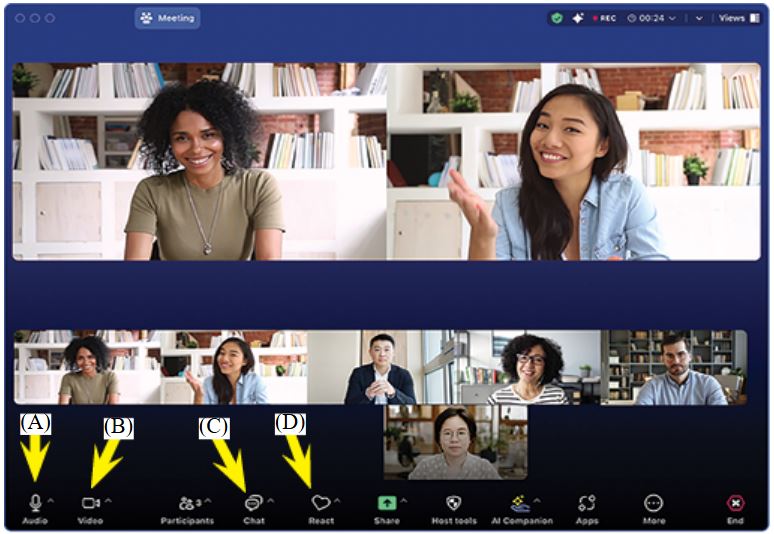
Shown here is a typical computer screen during a Zoom session.
- Muting your microphone is located at (A)
- Pausing your video streaming is located at (B)
- Chat icon is located at (C)
- Raising your hand to ask a question may be found in the React icon (D)